What Side Does the Tassel Go On? The Complete Graduation Tassel Guide
It’s one of the most-Googled questions every spring, and for good reason: nobody wants to be the one graduate wearing their cap wrong in the photos. So, what side does the tassel go on? The short version is that it depends on whether you’ve officially graduated yet. Before you receive your diploma the tassel sits on one side, and during the ceremony you move it to the other—a small ritual that carries a surprising amount of meaning. This guide walks through the rule, the tradition behind it, and the color details that make a tassel feel like yours.
What side does the tassel go on before graduation?
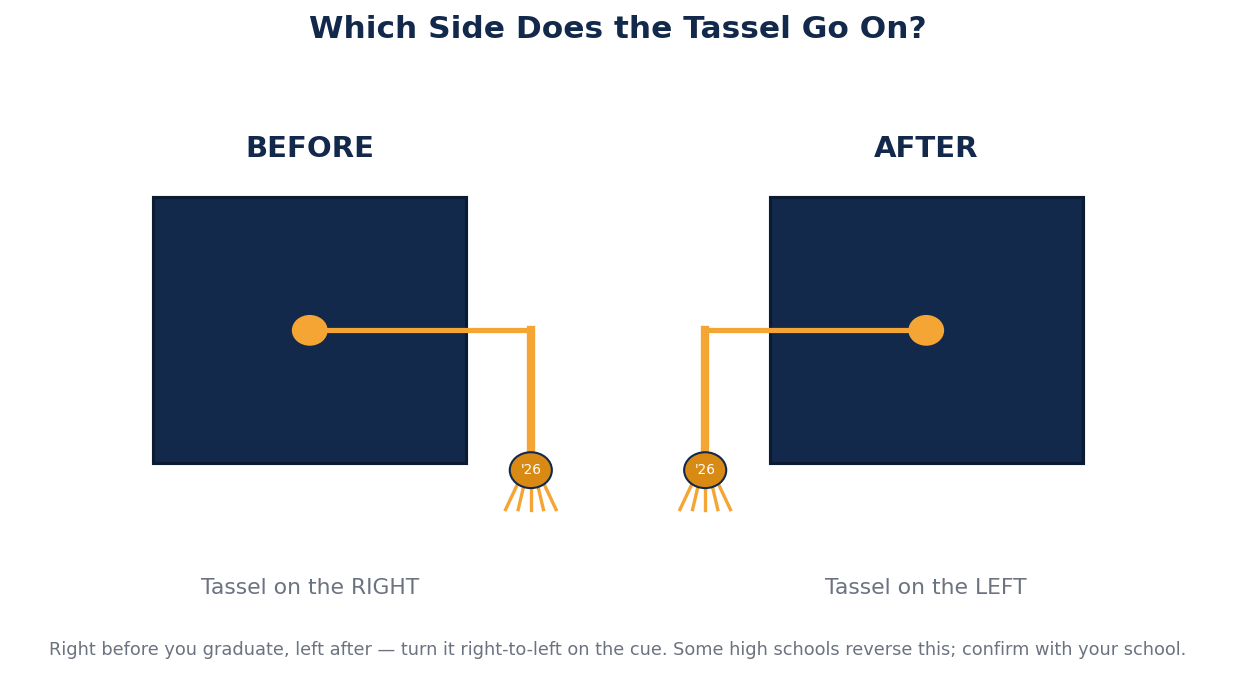
Before the big moment, the tassel hangs on the right side of your mortarboard (the flat graduation cap). This is the “not yet a graduate” position. You’ll wear it on the right as you line up, process in, and take your seat. Keeping it on the right is what makes the tassel-turn at the end feel like an actual milestone instead of just a styling choice.
A quick memory trick: “Right before, left after.” You’re on the right side before you’ve graduated, and you switch to the left once you have.
When and which way do you turn the tassel?
The tassel turn happens at the climax of the ceremony. At most colleges, everyone moves their tassel from right to left together once degrees are officially conferred—when the dean or president declares the class graduated. At many high schools, students turn the tassel individually as they cross the stage and receive their diploma.
The direction is the part people overthink. You move it from right to left, which means you physically lift the tassel up and over the top of the cap. Don’t stress about the exact arc—the side it lands on is what matters.
Why does the side matter? The meaning behind the turn
Moving the tassel from one side to the other is a centuries-old academic gesture that marks your transition from candidate to graduate. It’s the visual punctuation on years of work—a single, shared movement that says “it’s official.” Because it’s so symbolic, schools are intentional about everyone doing it at the same moment, which is why you’ll often hear the instruction called out from the stage.
There’s no legal rulebook, but the convention is remarkably consistent across the U.S. The right-to-left turn is the standard you’ll see at the vast majority of ceremonies.
High school vs. college: do the rules change?
Mostly the rule is the same, but there’s one common wrinkle. Here’s how the typical conventions compare:
| Setting | Before ceremony | After / when conferred | How the turn happens |
|---|---|---|---|
| College (most) | Right side | Left side | Whole class turns together when degrees are conferred. |
| High school (common) | Right side | Left side | Often turned individually as you cross the stage. |
| Some high schools | Left side | Right side | A few flip the convention—check your program. |
| Master’s / doctoral | Left side (often) | Stays left | Advanced degrees sometimes start on the left. |
The takeaway: the right-before, left-after rule covers most graduates, but your school’s printed program or ceremony rehearsal is the final word. When in doubt, match what the row in front of you is doing.
Graduation tassel colors: what they mean
Beyond which side it sits on, your tassel’s color often carries meaning too. Many schools use a single school-color tassel for everyone, while colleges frequently assign colors by field of study (a system tied to academic regalia tradition). Common associations include:
- White — arts, letters, and humanities
- Gold / yellow — science
- Light blue — education
- Pink — music
- Purple — law
- Green — medicine
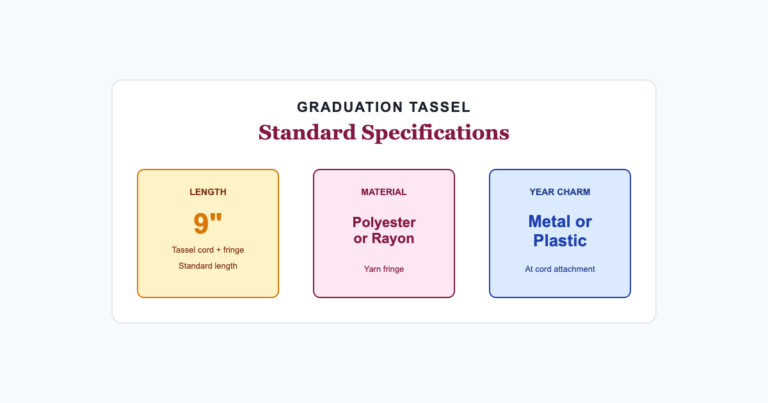
Many graduates also add a year charm (a small “2026” signet) to the tassel as a keepsake. If your school lets you choose, a custom tassel in your exact school colors with a year charm is an easy way to make the moment—and the photos—feel personal. You can design your own graduation tassel with the colors and charm you want.
Common tassel mistakes to avoid
- Turning it too early—wait for the cue, or you’ll be out of sync with your class.
- Forgetting to start on the right, which makes the turn meaningless.
- Letting the tassel dangle in front of your face for photos (clip or tuck it back).
- Assuming every school is identical—high schools sometimes reverse the sides.
Pick your school colors and add a year charm in minutes—then wear it with confidence, on the right side first.
Get a QuoteOutfitting a whole class or club? Read our companion guide to custom graduation tassels in bulk, or browse ready-to-personalize options in our graduation tassel collection.
Frequently asked questions
What side does the tassel go on before you graduate?
On the right side of your cap. You wear the tassel on the right while you process in and take your seat, then move it to the left once your degree is officially conferred. A simple way to remember it: right before, left after.
Which way do you turn the tassel?
From right to left. You lift the tassel up and over the top of the mortarboard so it settles on the left side. The exact path doesn’t matter—what matters is that it ends up on the left to mark that you’ve graduated.
Why do you move the tassel from right to left?
It’s a traditional academic gesture symbolizing your shift from graduation candidate to graduate. Doing it together as a class makes the moment official and shared, which is why the cue is usually announced from the stage.
Do high school and college tassel rules differ?
The right-before, left-after rule applies to most ceremonies. The main difference is timing: colleges usually turn the tassel all at once, while high schools often turn it individually as each student crosses the stage. A few high schools reverse the sides, so check your program.
Traditions vary by school and ceremony. Always confirm the specific instructions in your graduation program or rehearsal. Last reviewed: 2026.