Two-Tone Graduation Tassel: Single, Two-Tone, and Tri-Color Compared
The two tone graduation tassel is the most common style at high school commencements, but it’s far from the only option. Single-color and tri-color tassels each have a place too, and picking the right one depends on school colors, ceremony tradition, and how visible the school identity needs to be on stage. This guide compares the three styles head to head.
Single-Color Tassels: When Less Is More
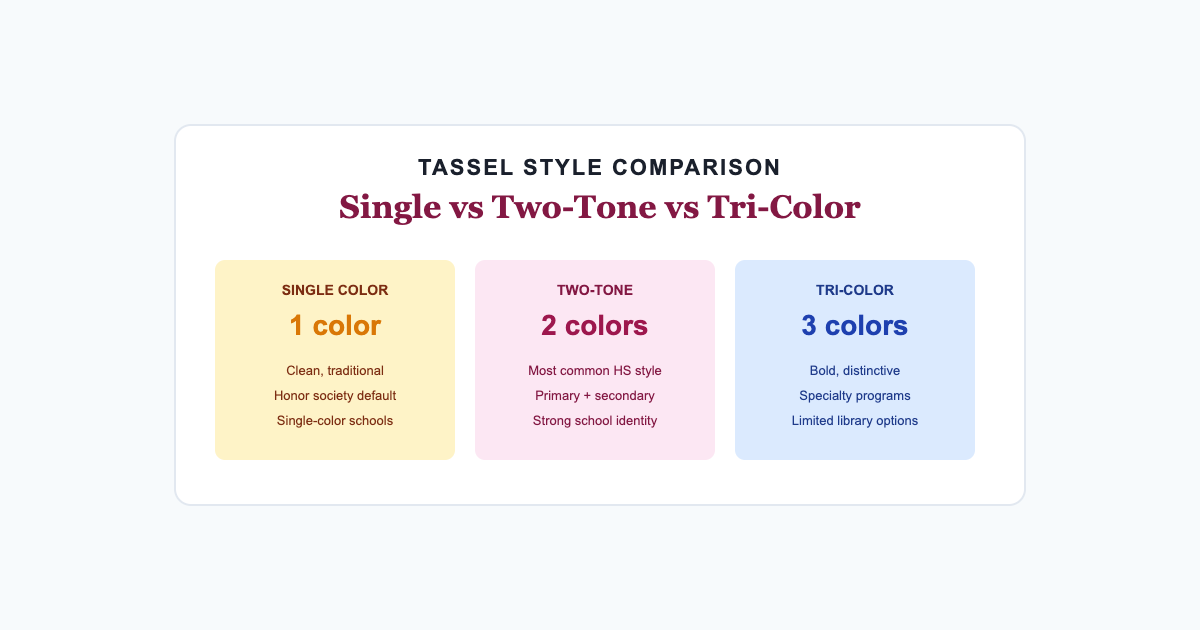
Single-color tassels use one yarn color throughout. They read as clean, simple, and traditional. Schools with a single dominant color (think gold-only, navy-only, maroon-only) often default to single-color tassels because the school identity is already conveyed clearly without a second color.
Single-color is also the convention for honor society tassels: gold for cum laude, white for some honors societies, specific colors for fraternal organizations. The single-color signals a specific designation without needing additional decoration.
Cost-wise, single-color tassels are slightly cheaper than two-tone (typically $0.50–1.00 less per unit), since production is faster.
Two-Tone Tassels: The Standard School Tassel
Two-tone tassels combine two yarn colors in a 50/50 split, with the colors typically alternating in vertical stripes through the fringe. This is the standard for most public high schools and many universities — the two colors represent the school’s primary and secondary, displayed visibly throughout the ceremony.
The two-tone style works well for any school with a distinct color pair: red and white, blue and gold, green and silver, navy and yellow. The visual reads as “school colors” from a distance, which is what most ceremonies want.
Production-wise, two-tone tassels take a slight bit more time to make than single-color, but the cost difference at bulk volumes is small — usually $0.25–0.50 per unit.
Tri-Color Tassels: When Three Colors Matter
Tri-color tassels combine three yarn colors. They’re less common than two-tone but appropriate for a few specific cases: schools with three brand colors (some private and parochial schools), historic universities with traditional regalia conventions, fraternal organizations that recognize three colors as part of their identity, or commemorative tassels for milestone graduations.
Tri-color tassels are the most expensive of the three options, typically $1–2 more per unit than two-tone at bulk volumes. The pricing reflects more complex production and more yarn changes per tassel.
For schools considering tri-color, the practical question is: does the third color add meaningful identity, or is it visual noise? Most high schools end up at two-tone for clarity. Universities with deeper traditions often have a clearer answer for tri-color.
Color Match Considerations
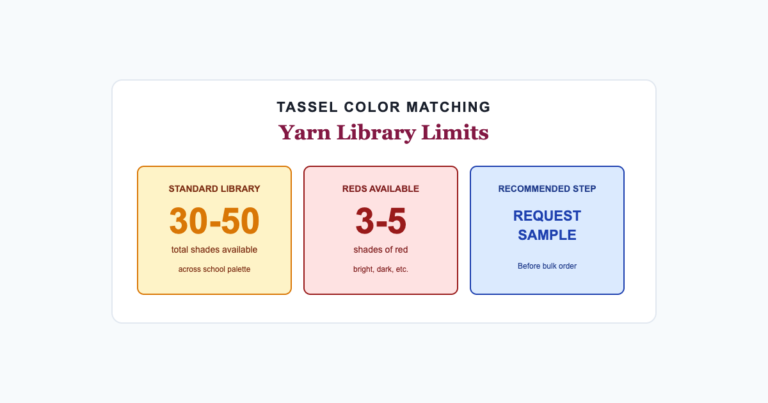
Yarn colors are produced in fixed batches, so “exact” color matching to a Pantone or CMYK spec isn’t always possible. We can match closely to most school colors using our standard yarn library, and we ship samples on request before bulk production for color-critical orders.
For schools with brand-protected color identity (logos that must reproduce in specific Pantone values), order a tassel sample first to confirm the yarn match before committing to the bulk run. The sample turnaround is typically 1 week.
Tri Color Tassel and Honor Variants
For schools that want a base school-color tassel for everyone plus a variant for honor students, the cleanest design is: two-tone in school colors for the standard class, and tri-color (school primary + school secondary + gold) for cum laude and above. The third color (gold) signals the academic distinction without requiring separate tassels.
This kind of color-coded honors variant is a clean way to differentiate without adding setup complexity. We can run both variants in the same order with one approval cycle.
Choosing the Right Style for Your Order
Default to two-tone for most high school and college commencements. Single-color works for honor society or single-color schools. Tri-color is right when there’s a specific reason for three colors — tradition, identity, or commemoration.
Send us your school colors and we’ll confirm yarn matches and quote both single-color and two-tone options. Request a quote with your colors and class size.