Graduation Tassels, Cords, and Stoles: What Each Piece Means and What to Order
Graduation regalia is a small visual language. The tassel is the one piece almost every graduate wears, but the moment a school starts recognizing honors, clubs, or heritage, cords, stoles, and sashes join the picture. If you are ordering for a whole class rather than a single cap, it pays to know exactly what each piece is, who wears it, and how it is sized, so the order arrives complete and nothing shows up on the wrong graduate.
The tassel: the piece everyone wears
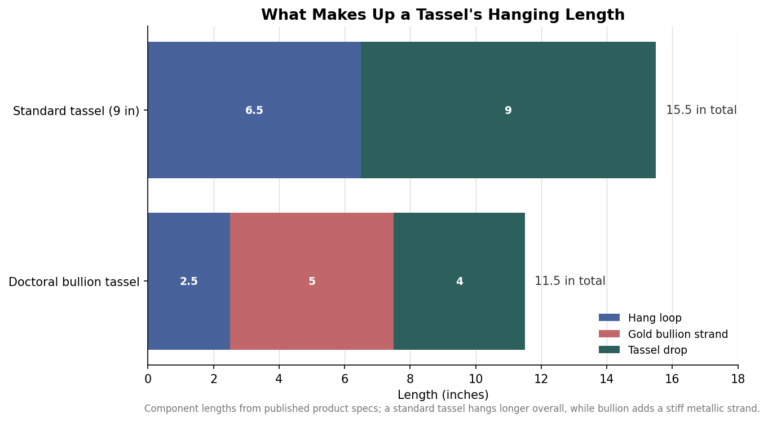
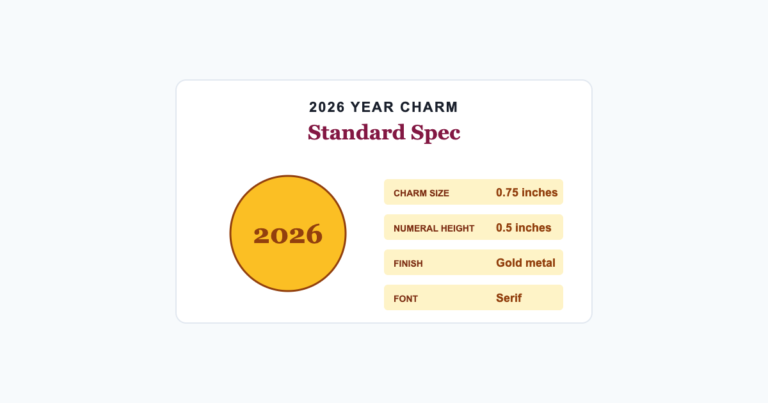
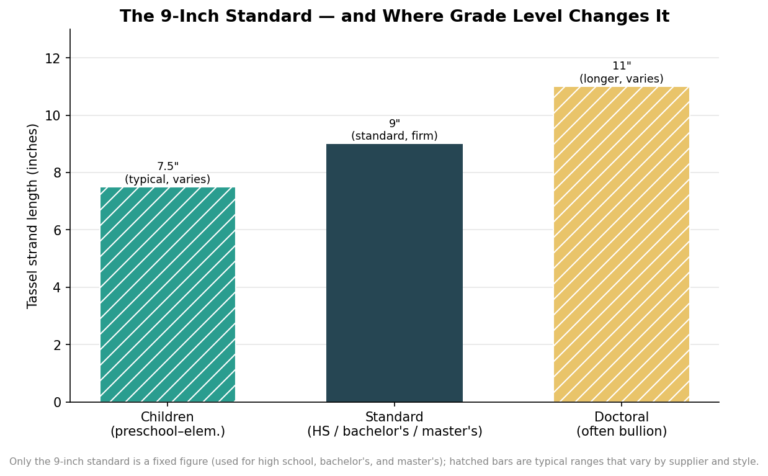
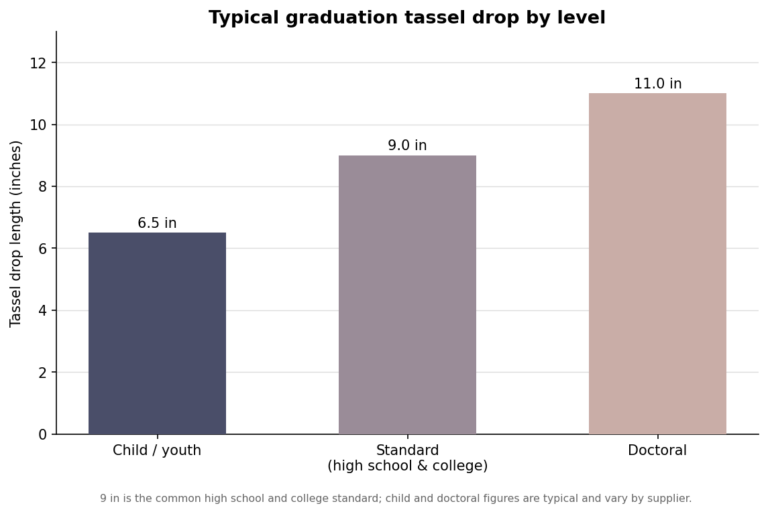
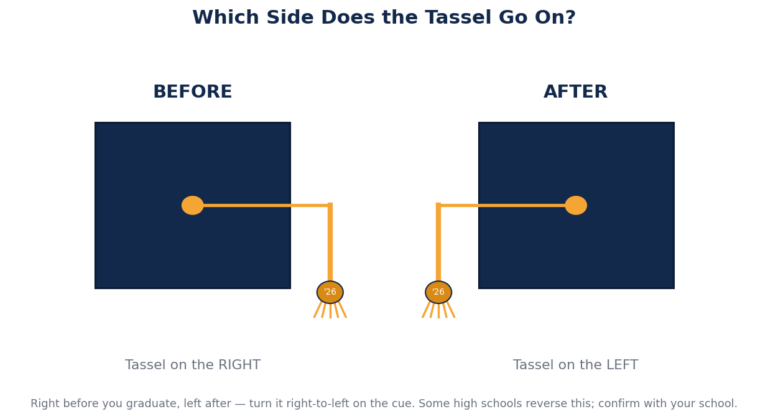
The tassel is the baseline of any graduation order because, unlike honor pieces, it is worn by every single graduate. It attaches to the button at the center of the mortarboard, and the fall hangs over the edge of the cap. A standard cap tassel has a fall of roughly nine inches plus a loop that slips over the button, though youth and specialty tassels run shorter. During the ceremony it is moved from one side of the cap to the other to mark the moment of graduating, which is why the color and any attached year charm are chosen to read clearly at a distance. Because it is universal, the tassel is the piece a school typically orders in the largest, most predictable quantity: one per graduate, plus a small buffer.
Honor cords: the twisted pair
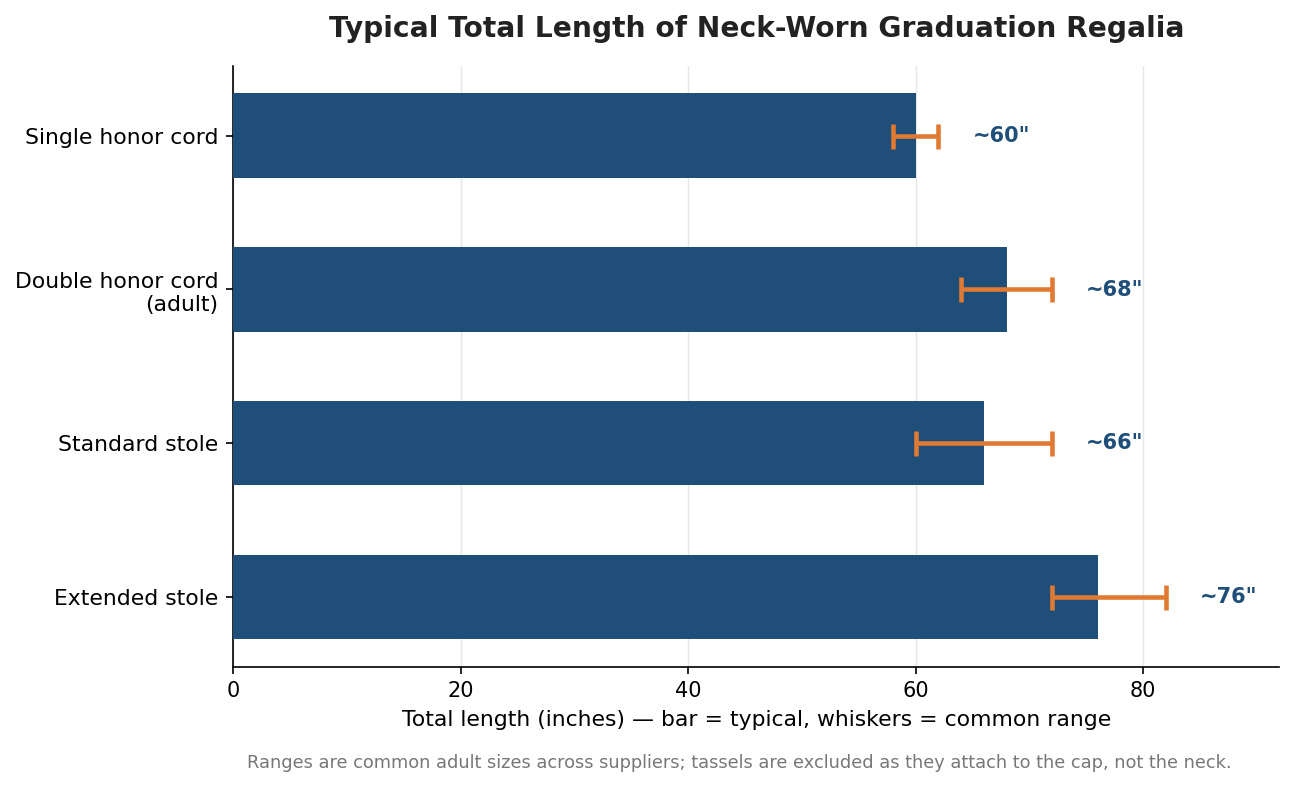
An honor cord is a length of twisted cord with a small knotted tassel on each end. It is draped around the neck so the two ends hang down the front of the gown. Adult double cords commonly run about 68 inches in total length, which puts the hang at roughly 30 to 34 inches per side; single cords are a little shorter. A single cord is one continuous strand, while a double cord twists two colors together, which is how a school can pair, say, a society’s two colors in one piece. Cords signal academic standing: Latin honors and grade-point thresholds, departmental honors, or membership in a recognized honor society. High achievers often wear more than one set at once, and many colleges provide honor cords at no cost to the graduate even when other regalia is student-paid.
Stoles and sashes: the wide canvas
A stole is a satin or silk band worn over both shoulders, hanging down the front of the gown. It is wider than a cord, which is the whole point: the extra width gives room for embroidery, patches, and printed text. That makes stoles the piece of choice for Greek life, student government, ROTC, cultural and heritage organizations, valedictorians, and similar affiliations that want a name or emblem visible. The word “sash” is sometimes used interchangeably, though a sash more often describes the single-shoulder, pageant-style band; in a graduation context most buyers mean a stole.
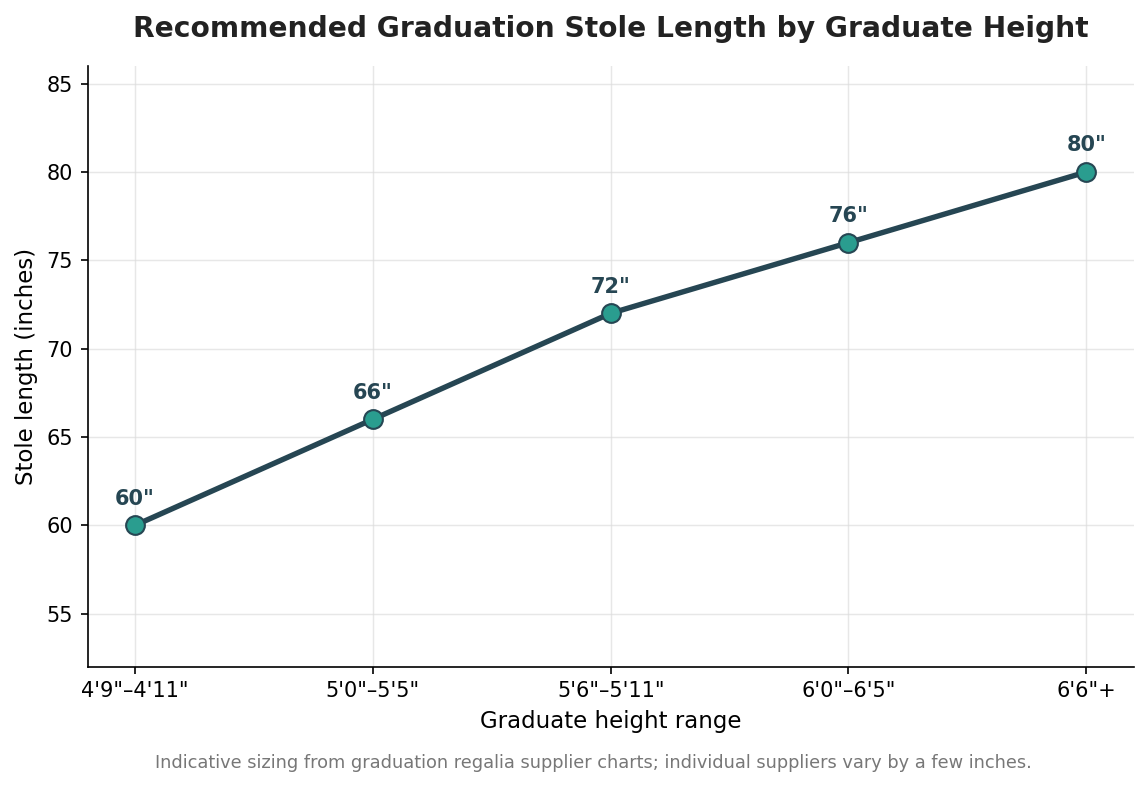
Stoles are sized by the height of the wearer rather than sold in one length. Common adult stoles run from about 60 inches for shorter graduates up to 72 inches for average height, with extended lengths of 76 to 80-plus inches for taller graduates so the ends still fall between the waist and mid-thigh. Width is typically in the four-to-six-inch range, though that varies by supplier. The figures below are indicative sizing drawn from regalia supplier charts, and any given maker may differ by a few inches.
Deciding who wears what across a class
Schools, not suppliers, set the rules for who may wear which piece, and those rules shape what you order. A typical framework treats cords as academic recognition and stoles as organizational or affiliation recognition. Colleges frequently formalize this: it is common to see a cap of no more than two stoles per graduate, with stole eligibility requiring sign-off from a student-services office and limited to organizations the school officially recognizes, while honor cords can be stacked without a limit. Medallions, where used, are usually reserved for specific academic teams or roles. For a K-12 program or a small training cohort, the same logic scales down cleanly: tassels for everyone, cords for the top academic tier, and stoles reserved for a defined special group. The length comparison below is useful when you are trying to visualize how the neck-worn pieces sit together on a single graduate.
Ordering for a full class: matching, approval, and lead times
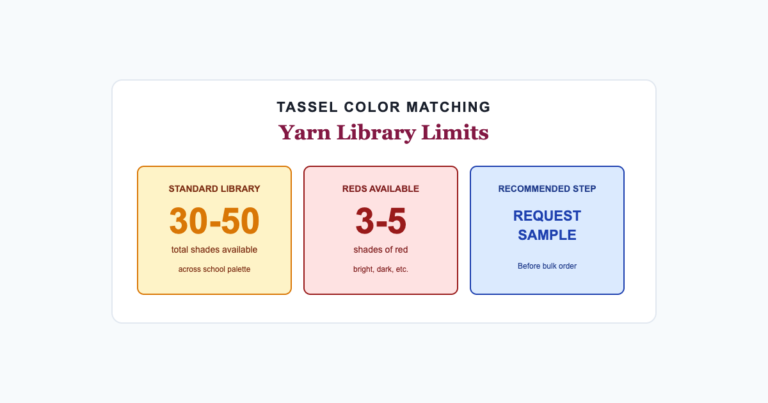
The cleanest way to build a class order is in layers. Start with tassels for every graduate, since that count is the most stable, then decide the honor pieces on top. Color matching is where multi-piece orders go wrong: a tassel’s dyed threads, a cord’s twist, and a stole’s satin can all read as slightly different versions of the same “school blue” if they are specified loosely, so it helps to nail down a consistent color reference and, where a supplier supports it, a Pantone target rather than a color name. Watch the youth-versus-adult distinction too, because a middle-school order sized in adult lengths will drag on the floor.
Decoration method follows the piece: embroidery or printing for the broad face of a stole, and a small printed or metal charm for a tassel. On timing, custom regalia commonly needs on the order of two to four weeks in production before shipping, and that window stretches during the spring graduation rush when every school is ordering at once, so build in margin rather than cutting it close. Order a modest buffer, often in the range of five to ten percent, to cover late additions and the graduate who loses a piece the week before the ceremony. Finally, approve a proof before the full run commits: a digital or physical sample catches a wrong charm year, a misspelled organization name, or an off color while it is still cheap to fix. Treat the numbers here as planning guidance rather than exact quotes, since lengths, lead times, and minimums vary by supplier and by the complexity of the decoration you choose.