Five Mistakes to Avoid on a Bulk Graduation Tassel Order
Ordering graduation tassels for a whole class looks like a simple purchase: pick a color, pick a year charm, multiply by the number of graduates, done. Then the box arrives and the reality sets in — the elementary tassels swamp the little caps, the tassels you reordered to cover late enrollees are a shade off, and there is no time left to fix any of it before the ceremony. None of these problems are exotic. They are the same handful of mistakes that catch coordinators every spring, and each one is avoidable if you know it is coming.
This is a walk through the five that cause the most grief on a bulk tassel order, and how to head each one off before you approve the purchase.
Ordering one length for every grade level
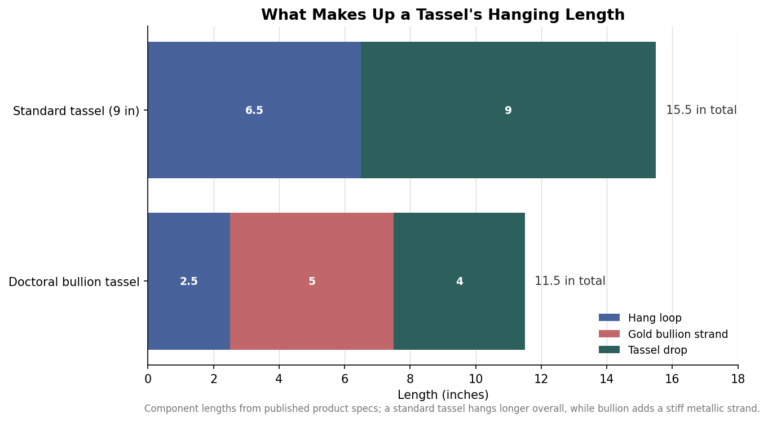
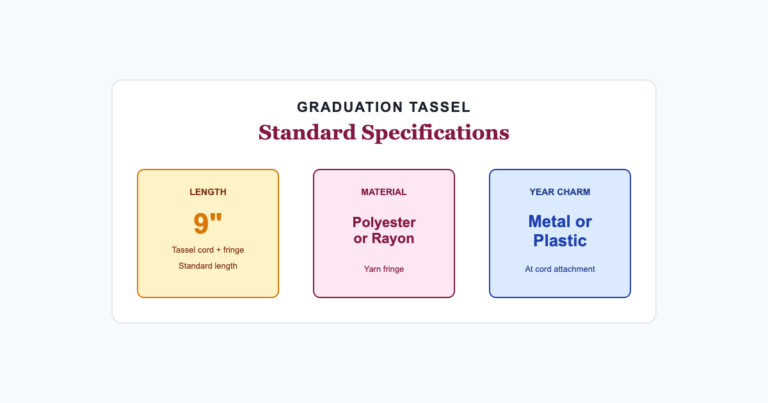
The most common misstep is treating length as a fixed number. The standard graduation tassel is nine inches long in the strands, and that length is used for high school, bachelor’s, and master’s ceremonies. It is genuinely standard, which is why it is easy to assume it fits everyone. It does not. On a preschool or elementary graduate, a full nine-inch tassel hangs down over the face and looks oversized against a small cap, which is why children’s tassels are usually made shorter. At the other end, doctoral tassels are frequently longer and made of metallic bullion rather than rayon, so they are a different product entirely.
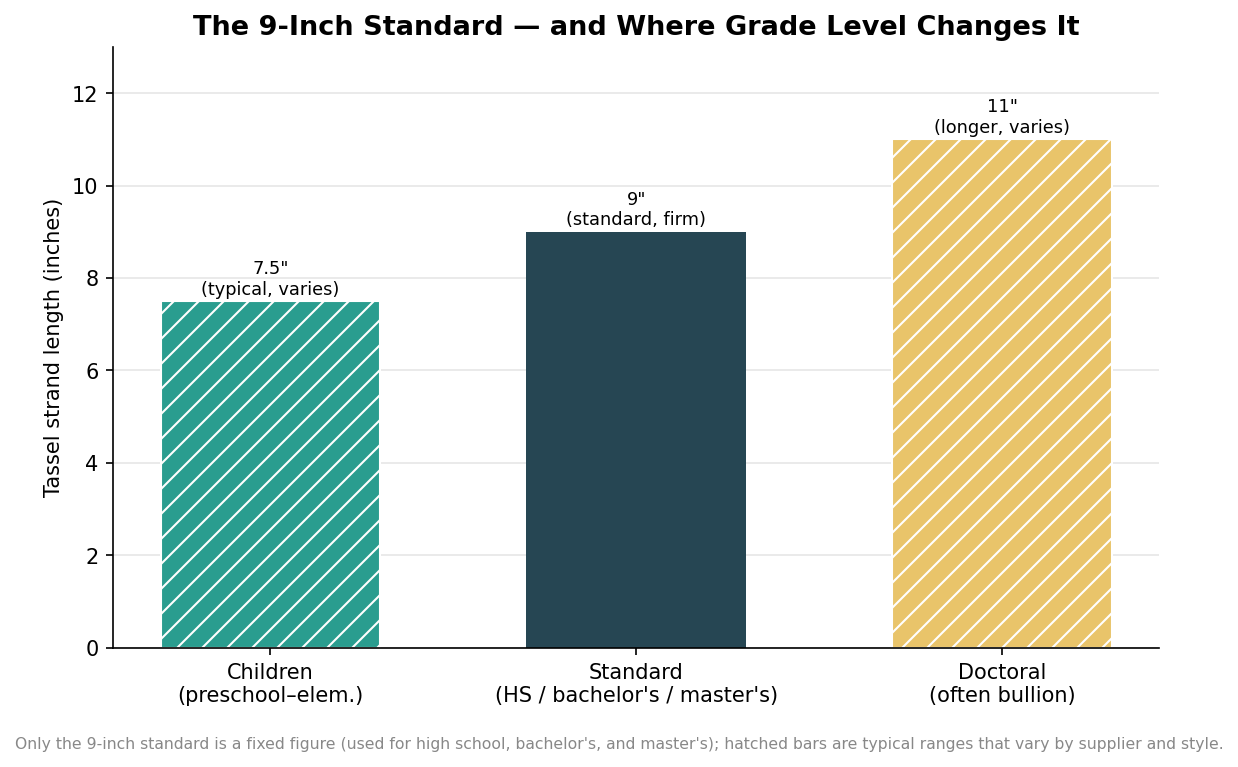
If your order spans multiple grade levels — a district buying for a K–12 range, say — do not let one line item cover all of them. Confirm the length for each group against the age of the wearers, and treat the nine-inch figure as the default for high-school-age and older only. The fix costs nothing at the order stage and is nearly impossible to correct once the tassels are in hand.
Ordering the exact headcount with no buffer
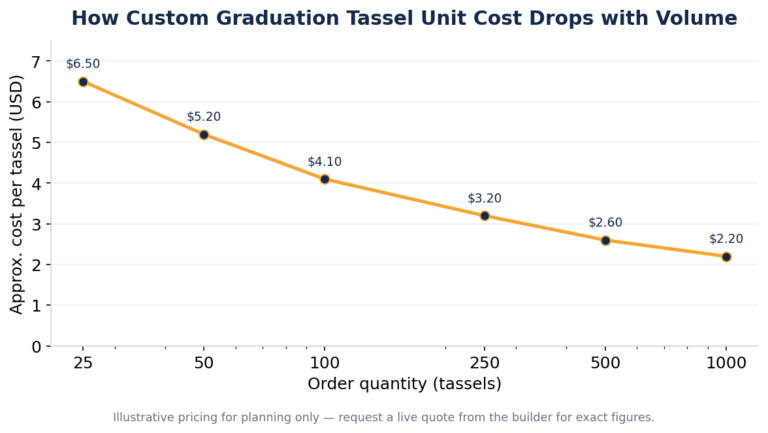
The second mistake is arithmetic optimism: ordering precisely as many tassels as you have graduates. Rosters move. Students enroll late, a few tassels get lost or damaged before the ceremony, and someone always needs a replacement the morning of. When that happens, you are placing a tiny reorder, and small orders of custom goods are the most expensive way to buy them.
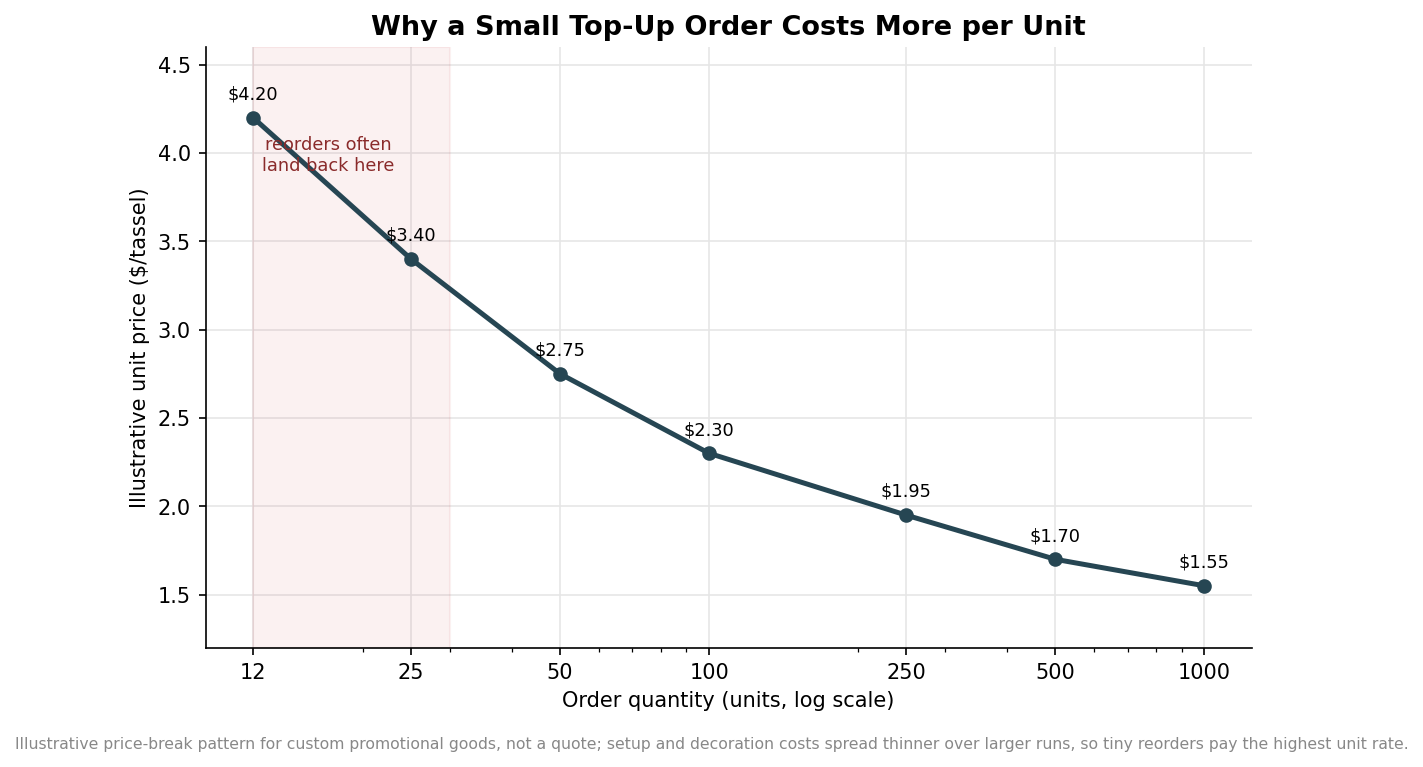
Custom promotional items carry setup and decoration costs that are spread across the run, so the per-unit price falls sharply as quantity rises and climbs right back up on a handful of units. A reorder of ten tassels can land back at the highest unit price on the table, and that is before rush production and expedited shipping. Ordering a modest buffer over your headcount up front — enough to absorb losses and late additions — is almost always cheaper than a scramble reorder, and it means you are never short on stage.
Reordering later and getting a different color
Closely related, and more insidious, is the assumption that a reorder will match. Tassel strands are dyed in batches, and two runs of the same color specification can come out with a slightly different tone depending on the dye lot. On a single tassel no one notices. Lined up across a class in matching gowns, a subtly different shade in a cluster of tassels is exactly the kind of thing that shows up in photographs. The way to avoid it is to order the full quantity, buffer included, in one purchase order so every tassel comes from the same lot. If you truly must reorder, ask whether the supplier can match the original lot, and set the expectation that a perfect match is not guaranteed once the first batch is closed out.
Overlooking the year charm and the cap-button fit
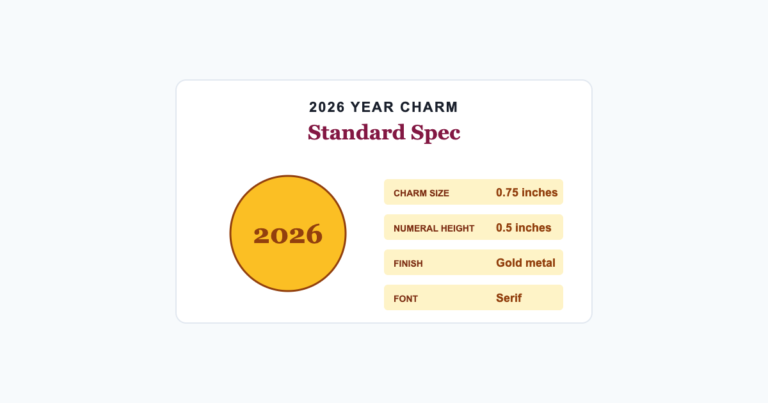
The details that make a tassel feel finished are also the ones that get skipped. The year charm — the small gold or silver metallic signet that carries the graduation year — has to actually say the right year, and on a bulk order it is worth confirming the year and the finish on the proof rather than assuming. It is a fixed detail stamped into metal; there is no fixing a wrong year after production. The other easy oversight is the loop. A tassel attaches to the button on top of the mortarboard, and the loop or signet at the top needs to fit the caps you are actually using. Child caps and adult caps are not identical, so if you are pairing tassels from one source with caps from another, check that the tassel loop seats on the cap button before you commit to hundreds of units.
Leaving no time to catch a problem
The final mistake ties all the others together: ordering too late to react. A custom bulk order moves through proof approval, dyed-to-order production, charm assembly, and shipping, and every one of those steps takes real days. When you compress that timeline to the last possible week, you remove your own ability to fix anything — a wrong charm year, a length that looks off, a short count — because there is no slack left to reprint, remake, or reorder. Placing the order well ahead of the ceremony, with the proof reviewed carefully the moment it arrives, is what converts all of the fixes above from emergencies into quick adjustments.
Taken together, these are not warnings about a difficult product. Tassels are simple and inexpensive. The trouble comes from treating a class-wide order as a single number instead of a set of small decisions — length by grade, a buffer over headcount, one dye lot, the right charm and fit, and enough lead time to catch a mistake while it is still cheap to catch.